Leisure is one of the most misunderstood words in the modern vocabulary, particularly in the Protestant Anglosphere.
To many people, leisure means entertainment, relaxation, or simply time spent away from work. Yet the classical and Christian tradition understood leisure as something far richer. Leisure is not idleness. It is not laziness. It is not the absence of activity. Rather, proper leisure is the interior disposition that allows man to step outside the world of utility and encounter reality as a true gift.
This is why the Thomistic philosopher Josef Pieper famously argued that “Leisure is the basis of culture.” Culture, in the right context, does not arise from material production, efficiency, or economic activity alone. This is a Marxist anthropology, and it is entirely unwelcome here. Culture authentically emerges out of contemplation, specifically the contemplation of truth.
The greatest achievements of civilization, art, philosophy, literature, music, and even the sciences, are born not from frantic activity for its own sake, but from the human capacity to wonder. This is the basis of Pope Leo XIV’s first encyclical, Magnifica Humanitas, and it is worth reading for a much deeper understanding of human nature in a digital age.
As for Pieper, he recognized that modern society poses a unique threat to leisure because it conditions us to see everything through the lens of utilitarianism. The modernist, and many of us by accident, will only ask what something produces, what measurable benefit it provides, or how efficiently it achieves a desired result. We do this, at risk of jeopardizing our wonder, rather than asking what a thing is for, why it exists, and how we ought to engage with it. We have become uncomfortable with any activities that exist for no purpose at all, beyond their own goodness.
In such a world, even our leisure has to becomes work in order to legitimize down-time. We optimize our hobbies, we quantify our recreation, and we transform our rest into yet another form of consumption. We are entertained constantly, but rarely in a contemplative way. We are connected continuously, but often deprived of meaningful friendships.
It may seem strange, then, to suggest that a pipe or a cigar can teach us something about leisure. Yet both persist precisely because they resist the spirit of modernity. Tobacco culture, specifically through the aforementioned mediums, resists the tyranny of “right now” that has crippled our ability to enjoy creation.
Neither pipes nor cigars can be rushed.
Neither is particularly efficient by any metric.
Neither serves any obvious productive purpose.
Both invite us, however briefly, to inhabit time in a different way than we are used to; and yet it must be stated that pipes and cigars do so in distinct ways from one another.
The Pipe and the Art of Contemplation
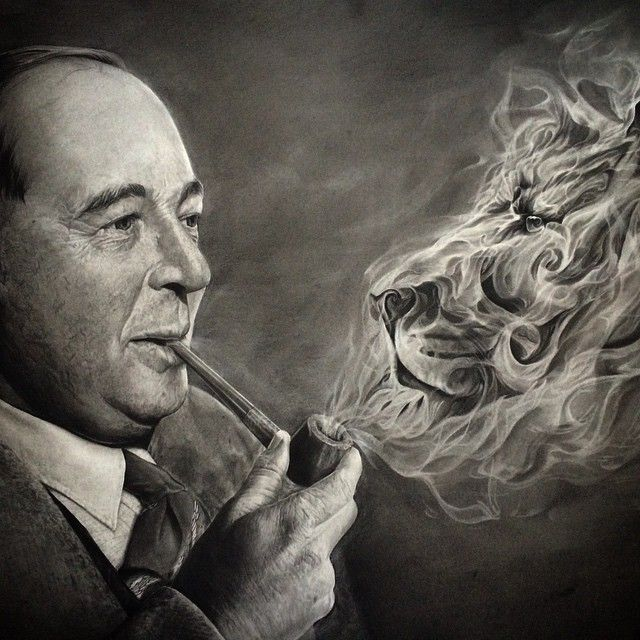
The pipe is perhaps the more contemplative of the two. There is a reason that philosophers, professors, clergymen, classically-trained actors, and authors have so often been associated with pipes. The ritual itself encourages one towards reflection. The tobacco must be selected to fit the occasion, then prepared, packed, lit, and patiently maintained throughout. I often demonstrate this to friends: the pipe smoker must pause periodically to keep his pipe lit in conversation. This pause naturally forces the speaker to stop and reflect on his next words, and the listener(s) a chance to volley thoughts of their own. It is like an intellectual tennis match, and it is inconducive to mindless babbling.
A pipe smoker cannot simply light up and forget about it. The act of pipe-smoking demands attention. Whereas the cigar smoker can set down their stick for minutes at a time and come back to it with minimal effort, a pipe will go out within fifteen to thirty seconds of inactivity. There is a dedication and a patience that must come with smoking a pipe, and these qualities further lend themselves to the art of contemplation.
This is why the pipe has long been associated with study and thought. One imagines a scholar in his library, a priest in his rectory, or an author wrestling with a difficult paragraph: all with a pipe-in-mouth. The pipe naturally accompanies activities that belong to the intellectual life. Simply put, it encourages stillness.
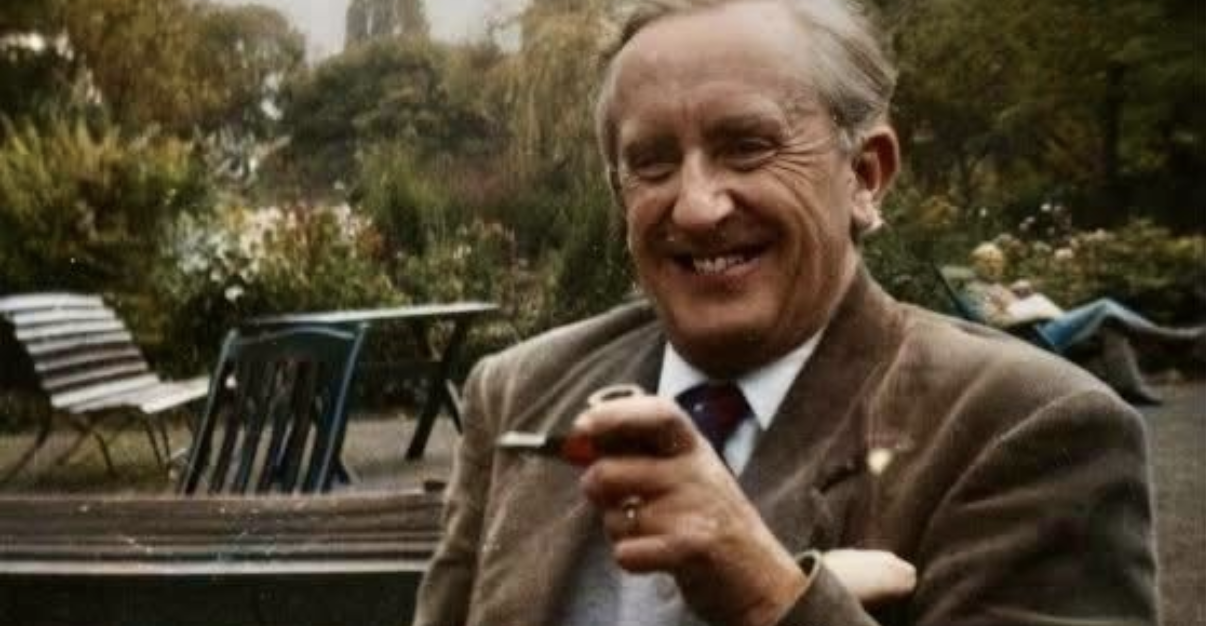
J.R.R. Tolkien understood this instinctively.
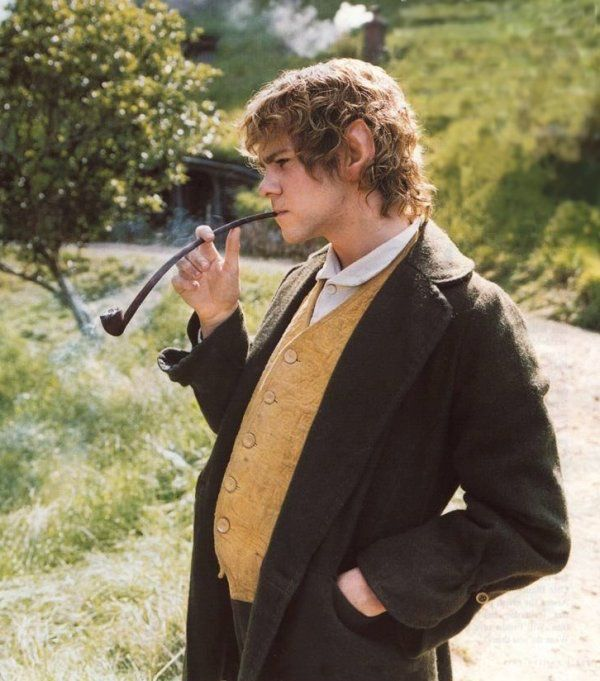
In Middle-earth, pipe-weed is not a symbol of excess, but of civilization and restfulness. The hobbits smoke while telling stories, sharing meals, and enjoying the quiet rhythms of ordinary life. This reflects a deeper truth about the Shire itself: it is not a place of Eden because it was grand or heroic. Rather, it was the sort of place that made heroism necessary in the first place. Bag End, the well-kept garden, the birthday parties: these are the goods for which the great battles of Middle-earth are ultimately fought.
The hobbits treasure their Longbottom Leaf, their Old Toby, and their Southern Star because they understand something that modern man often forgets: leisure, friendship, memory, and simple delight in creation are not distractions from life, but among its highest ends. The Shire is so beloved by hobbits and readers alike not because nothing ever seems to happen there, but because the best of things so often happen there.
Cigars and the Community
The cigar, by contrast, appeals less to contemplation necessarily and more to fellowship and community.
A cigar, at least in my experience, is rarely enjoyed in solitude. While one may certainly smoke a cigar alone, it finds its natural home among friends. The cigar lounge, the back porch, the hunting camp, and the dinner table have all historically been places of conversation. A cigar serves as a natural companion to these endeavors, as it encourages lingering. It creates space for stories, arguments, laughter, and companionship without the worry of pipes going out.
If the pipe belongs especially to the intellect, the cigar belongs especially to cultivating friendships.
This distinction mirrors an important truth about Christian anthropology and the human person. Man is both contemplative and social. We are ordered toward truth, but we are also ordered toward communion. We seek understanding, but we also seek fellowship. A healthy life inherently requires both.
Perhaps this explains why some of the great figures of the Catholic literary revival embraced one or the other, if not both. Tolkien famously preferred the pipe. Chesterton was rarely seen without a cigar.
The symbolism is fitting to their characters. Tolkien’s imagination turned inwardly toward myth, language, and sub-creation. Chesterton’s genius revealed itself in conversation, paradox, debate, and public engagement. Both men understood leisure, but they embodied different expressions of it. What united them was not merely their tobacco use: it was their gratitude.
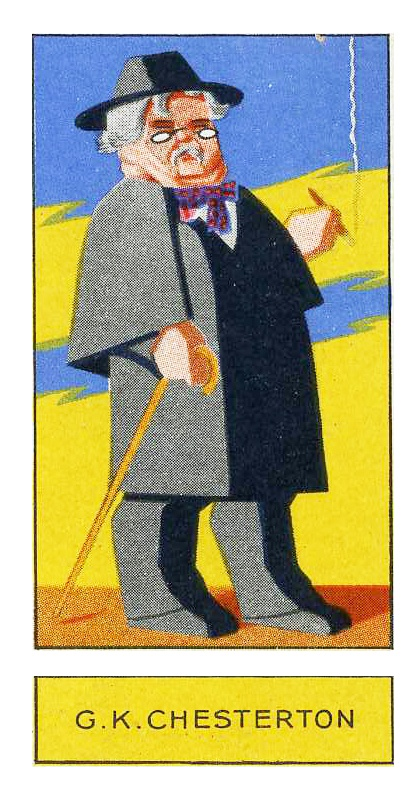
Chesterton once remarked that the world would never starve for want of wonders, but only for want of wonder. The pipe and cigar, at their best, both cultivate precisely this attitude. They encourage us to slow down enough to notice reality. They remind us that not every good thing must justify itself through productivity. The Protestant work ethic is not indicative of human nature, only the greed and restlessness of the modern era.
The deeper issue at stake is the attack on leisure itself. Modern man has become remarkably efficient at filling every moment. We reach for our phones in silence. We stream entertainment at the first sign of boredom. We move continuously from task to task, often without pausing long enough to ask why we are doing any of it. The result is a peculiar poverty. We have more conveniences than any civilization in history, yet many people feel increasingly distracted, anxious, and detached from both community and contemplation.
What we lack is not stimulation. What we lack is authentic leisure.
The pipe and cigar endure because they quietly rebel against this condition. They impose limits. They require patience. They resist acceleration. Most importantly, they create opportunities for the kinds of activities that make life truly human: conversation, reflection, storytelling, friendship, and wonder. The goal, of course, is not that every man should become a pipe smoker or a cigar enthusiast. The goal is that every household should recover genuine leisure.
Perhaps that leisure is found around a backyard fire pit.
Perhaps it is found on a front porch at sunset.
Perhaps it is found around a dining room table after a family meal.
Or perhaps it is found among friends sharing a pipe or cigar while discussing theology, literature, and the things that matter most. Whatever form it takes, leisure remains indispensable. Without it, culture withers. Friendship weakens. Worship becomes difficult. The soul forgets how to wonder, and how to rest. In recovering leisure, we recover something far more important than an old-fashioned habit. We recover a small piece of what it means to be human.

Leave a Reply