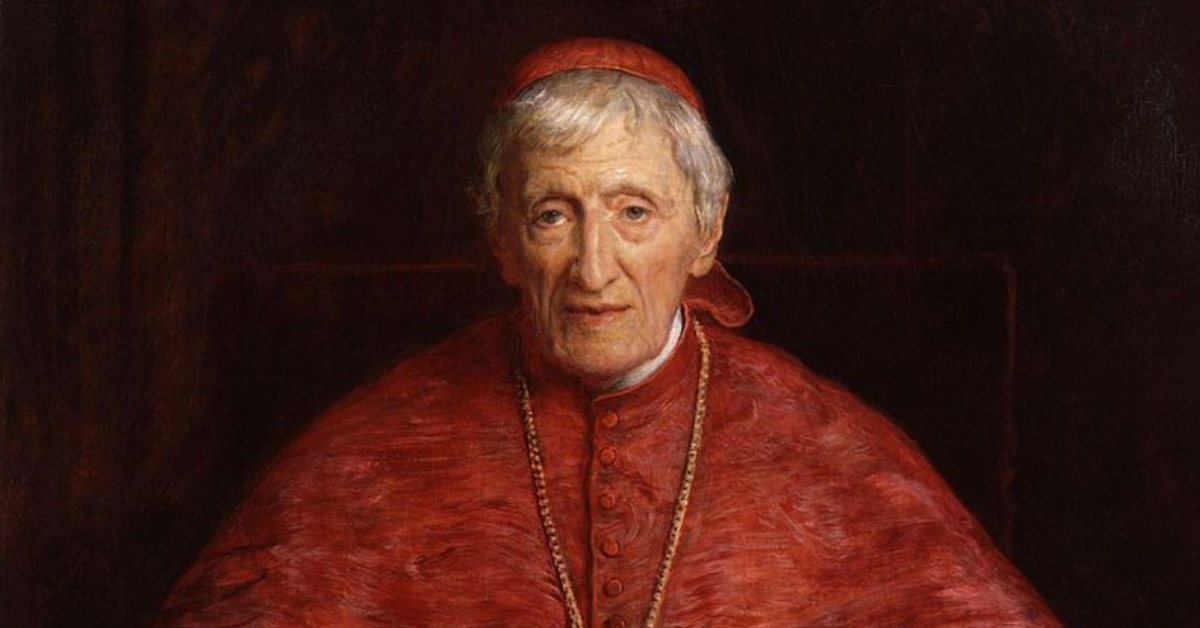
Few men can be said to have shaped the course of a civilization as profoundly as Cardinal Newman. Fewer still have done so not through political power, military conquest, or institutional authority, but through the witness of a conscience relentlessly devoted to the pursuit of truth. From his years as a scholar and fellow at Oxford, to his prominence as an Anglican priest and leader of the Oxford Movement, to his reception into the Catholic Church and eventual elevation to the cardinalate, St. John Henry Newman belongs to that rare company.
Today, Newman is remembered as a convert, a cardinal, and a saint. Universities, chaplaincies, and centers of Catholic formation across the world bear his name. Yet these honors alone do not explain why he remains one of the most consequential figures in modern Catholic history. To understand Newman’s significance, we must first understand the intellectual and spiritual crisis into which he was born.
Nineteenth-century England was a nation caught between worlds. The old Christian order was fading, industrialization was transforming society, and the future seemed increasingly uncertain. Liberalism was becoming the dominant intellectual force, a force that he was skeptical of, even in primary school. Religion was increasingly relegated to the private sphere, while public life came to be governed by the maxims of utility, progress, and individual opinion. Catholicism, meanwhile, remained heavily marginalized and viewed with tremendous suspicion by much of English society, particularly in upper-class circles.
This is the Victorian world that Newman was born into.
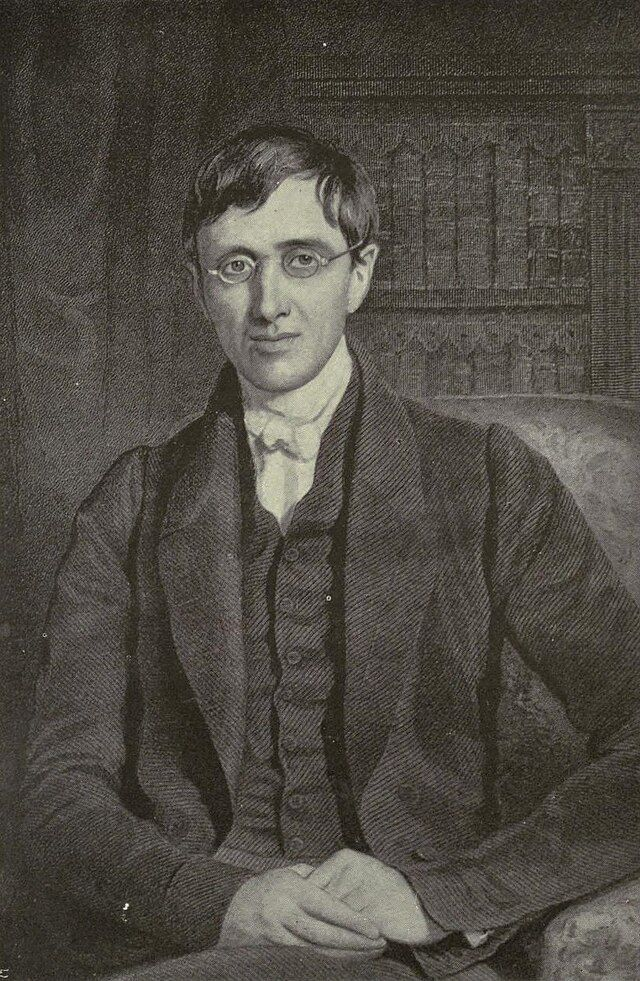
John Henry Newman spent much of his early life at Oxford University, first as a student and later as a fellow of Oriel College and an Anglican priest. Renowned for his intellectual capacity, seriousness, and eloquent style, he quickly became one of the most influential churchmen in England at a time of increasing religious skepticism among academia. The Anglican Church itself faced increasing pressure from both secular political forces and theological movements that sought to reshape Christianity to ‘fit with the times’ and align with these modern sensibilities.
In response to the liberal order emerging inside and outside of religion, Newman became one of the leading figures of what came to be known as the Oxford Movement. Beginning in the 1830s, the movement sought to remind Anglicans of their ancient Christian heritage, emphasizing the authority of the early Church, the apostolic succession of bishops, the importance of the sacraments, and the continuity of Christian tradition. Newman and his fellow reformers, such as Keble and Pusey, hoped not simply to create something new, but to recover what they believed had been forgotten in the Reformation.
Through years of studying the Church Fathers and the history of Christian doctrine, Newman gradually came to believe that the Catholic Church possessed the historical and theological continuity he had been seeking. For some time he remained a high-church Anglo-Catholic, but even this was unsatisfactory as history revealed the truth to him. Newman wrote, while still an Anglican, “to be a student of history is to cease to be Protestant,” a quote that is used combatively in Catholic apologetics today with many unaware of the original context.
Received into the Church in 1845, he sacrificed a multitude of career prospects, friendships, and social standing in pursuit of what he believed to be true. No longer able to justify his Anglican faith, his conversion sent shockwaves throughout English society; many Anglican clerics and laymen, dissatisfied with the liberal Anglican hierarchy, followed Newman across the Tiber. This choice revealed the principle that would define his life: a willingness to follow truth wherever it led, regardless of the cost.
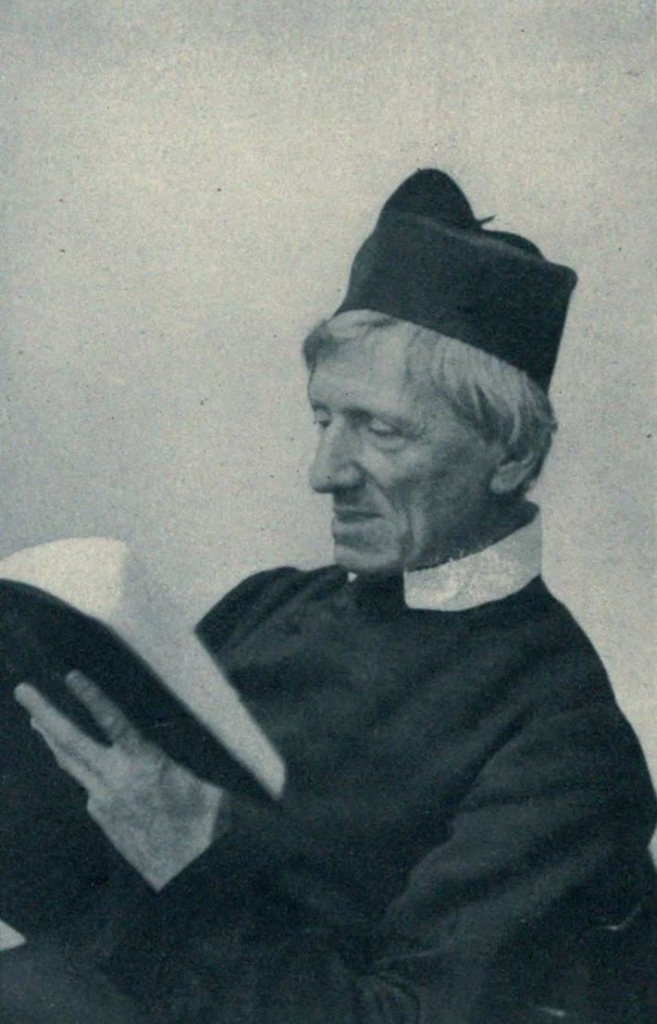
This exact commitment to truth became the central theme of his life’s work.
In his spiritual autobiography, the Apologia Pro Vita Sua, Newman offered one of the most compelling accounts of religious conversion ever written. On an anecdotal level, it has changed my own life and I often encourage friends to read it. Composed in 1864 in response to the criticisms of his conversion, the work is so much more than a defense of his reputation; it is the story of a man who followed truth wherever it led, and the sufferings and joys that it has brought him. Throughout the Apologia, Newman presents human conscience not as the freedom to create one’s own truth, but as the God-given capacity to recognize truth and the moral obligation to follow it. For Newman, conscience was an obedience to reality beyond mere self expression.
This distinction alone may be Newman’s most important contribution to our own age.
Modern culture often treats conscience as a synonym for personal preference. Whatever floats your boat! Newman saw it differently. To him, true conscience is the echo of God’s voice within the soul, calling man beyond himself toward objective truth. This is why Cardinal Newman could famously write that conscience is the “aboriginal Vicar of Christ.” Far from opposing authority and what it demands of us, conscience properly formed leads one toward Christ and His Church.
Yet Newman was not just a defender of authority. He was also one of the Church’s greatest thinkers on development and Christian renewal. It was this particular topic that arguably led to his declaration as the 38th Doctor of the Church.
In his Essay on the Development of Christian Doctrine, Newman addressed a question that continues to trouble many Christians today: If truth does not change, why does the Church’s understanding seem to grow over time?
His answer remains profoundly relevant today. Authentic development is not an alteration. It is a maturation. An oak tree differs from an acorn, and yet it remains the same organism throughout. So too does the Church grows in her understanding of divine revelation without changing the revelation itself. Newman’s insight provided a framework for understanding how the Church could remain faithful to the apostolic deposit while speaking effectively to new ages and new challenges.
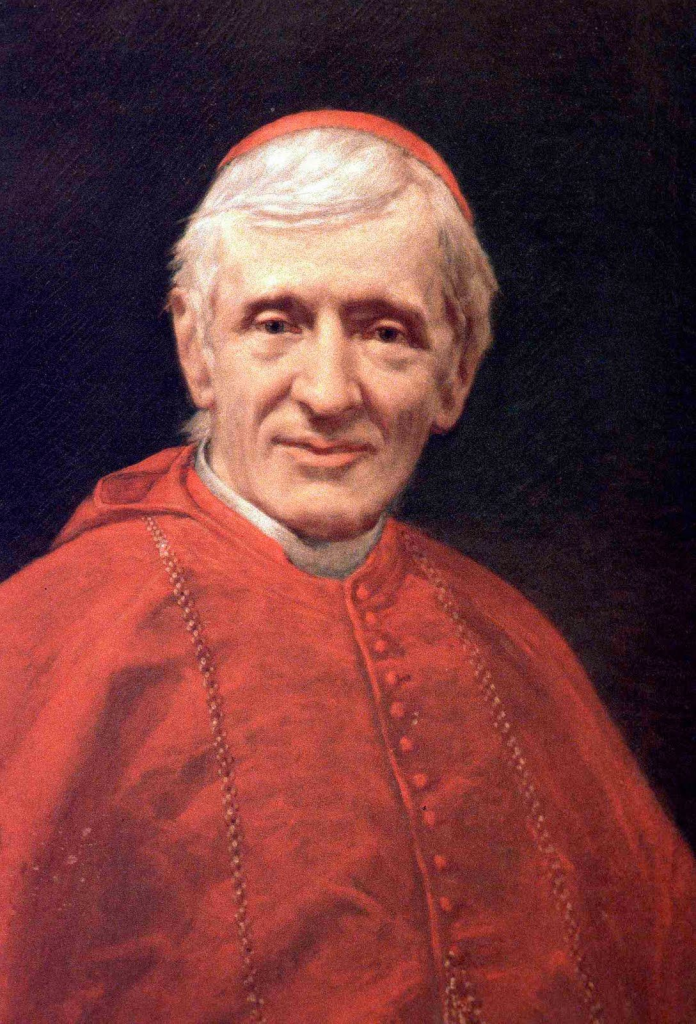
His achievement cannot be overstated in our own time.
Without Newman, Catholicism might have appeared to modern minds as little more than a museum of ancient doctrines. With Newman’s theory of doctrinal development, the Church could effectively demonstrate to even the most secular scholar that fidelity and growth are not enemies but objective companions.
The same vision animated his educational masterpiece, and my favorite work from Newman’s corpus, The Idea of a University. I first read this work as part of a Thomistic Institute book club as an undergraduate. It has truly changed my perception of what it means to be formed by a university, and inspires me to remain active in academic affairs all my life. In this work, against the growing tendency of his time and ours to reduce education to mere technical training, Newman argued that education exists first to cultivate wisdom, and that theology is essential to this vision as the queen of the sciences. A university, as Newman understood it, should not merely produce workers. It should form human beings capable of perceiving reality in its fullness, so that every aspect of society is peppered with well-rounded, capable human beings.
In this way, Newman argued that theology was not an optional subject among many. It was and remains the discipline that prevented all other forms of knowledge from becoming fragmented and incomplete. If one does not understand man’s relationship to God and the cosmos, he does not understand man. To exclude God from education was a grave error, far from the advertised neutrality from secular ideologues. It was the mutilation of knowledge itself and the hijacking of education.
This insight feels remarkably prophetic in our own age, when universities increasingly produce specialists who know more and more about less and less, often while losing sight of the larger questions of truth, meaning, and purpose. A liberal arts education is not meant to guarantee you a high-paying salary, it is intended to form you as a proper human being.
Even Newman’s novel Loss and Gain served the same mission. Through allegorical storytelling rather than sober argument, he explored the drama of conversion and the search for truth in a culture hostile to Catholic belief. The author foists his experiences in navigating conversion onto the character of Charles Reding as a means of telling his own story through a fictional lens—the work blurs the lines between fiction and autobiography in a refreshing manner. Long before J.R.R. Tolkien and C.S. Lewis baptized the modern imagination with their fictions, Newman demonstrated that literature could certainly become an instrument of evangelization.
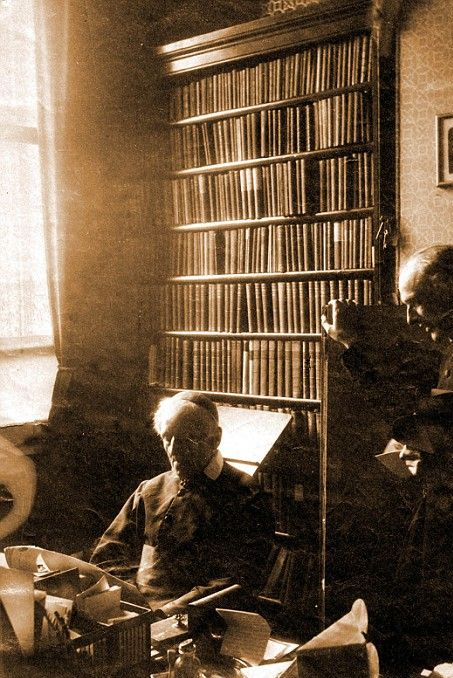
This helps explain why Newman stands at the beginning of so many intellectual lineages.
Without Newman’s conversion, it is difficult to imagine Cardinal Manning’s leadership of the restored English hierarchy. Without Cardinal Newman and the Birmingham oratory, there is no clear path to Gerard Manley Hopkins and the Catholic literary revival. Without Newman, it becomes harder to envision Chesterton, Belloc, Dawson, Lewis, Tolkien, and countless others who helped restore Catholic thought to the English-speaking world.
J.R.R. Tolkien himself acknowledged this debt indirectly, writing that he first learned charity and forgiveness from Fr. Francis Xavier Morgan, who was himself a student of St. John Henry Newman. Such a statement reveals the true nature of Newman’s influence. He did not merely transmit ideas. He formed souls into more intelligible and knowledgable persons.
This is why Newman deserves to be called a prophet of Catholic renewal.
St. John Henry Cardinal Newman saw the dangers of liberalism long before they fully matured. He recognized the temptation to reduce religion to mere sentiment, doctrine to opinion, and conscience to personal preference. Newman ultimately foresaw a culture that would increasingly separate freedom from truth, and he opposed it with all his might.
Yet Newman was no pessimist. He believed that truth remained attractive because truth ultimately has a face. The answer to modernity’s confusion was not withdrawal, bitterness, or despair. It was actual holiness, actual intellectual seriousness, and actual fidelity to Christ. That conviction remains as urgent today as it was in Victorian England.
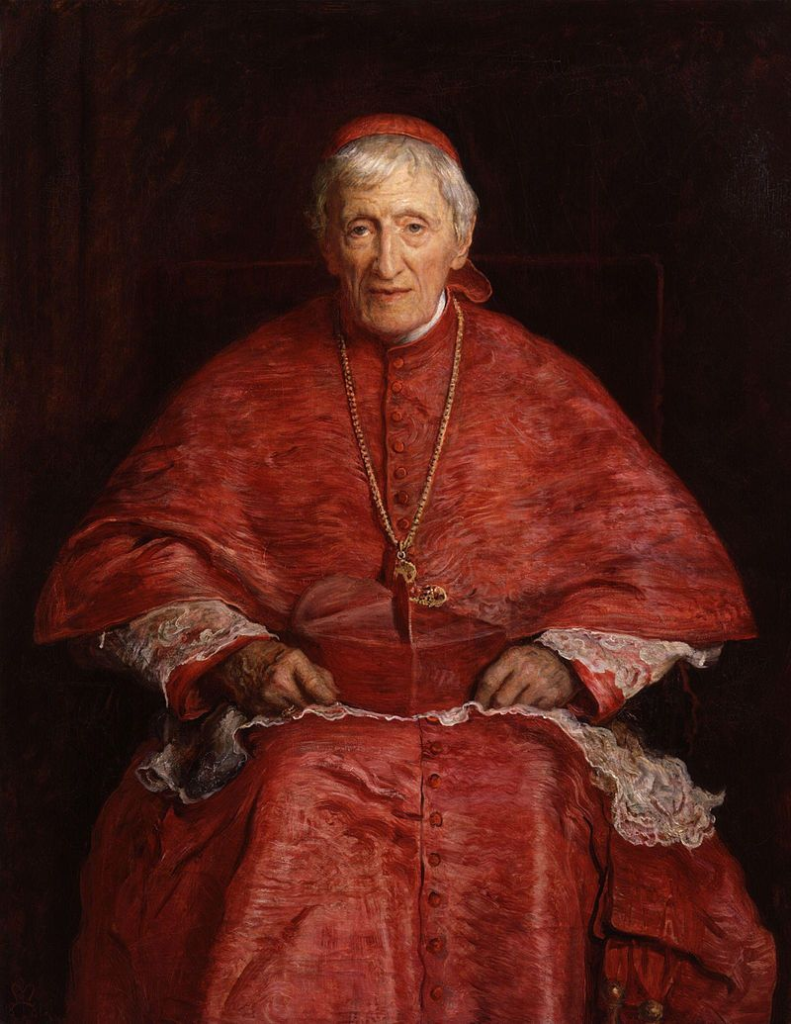
We inhabit a culture increasingly characterized by distraction, relativism, and spiritual amnesia. Like Newman, we live in an age tempted to treat all beliefs as equally valid and all truths as negotiable. Just like Newman, we face a society eager to enjoy the fruits of Christianity such as peace and social equality while forgetting its moral roots. His response to modernity should become our own. We believe that renewal begins with interior conversion. It begins with conscience properly formed. It begins with a love of truth stronger than comfort or popularity. Above all, renewal begins with Christ speaking to the human heart.
Cor ad cor loquitur. Heart speaks unto heart.
That was Newman’s episcopal motto. It was also the secret behind his tremendous influence. Institutions matter. Ideas matter. Arguments matter. Yet civilizations are ultimately renewed when one heart, set ablaze by truth, awakens another, and another. Newman helped rekindle Catholicism in England because he first allowed Christ to rekindle it within himself. The same task remains before us today. “Lead, Kindly Light, amid the encircling gloom, Lead Thou me on…”
Leave a Reply