Modern man has forgotten the art of walking.
I do not mean that literally, of course. We still walk from the parking lot to the office, from the house to the mailbox, and from one errand to the next. Yet walking, in the older and richer sense of the word, has largely disappeared from our lives. We move quickly, efficiently, and often without attention to finer details. Distances that once required a day’s travel or more now take minutes. Silence is filled with podcasts and music playlists. Solitude is interrupted by chirpy notifications. We travel farther than our ancestors ever imagined for work or school each day, yet often remain strangely detached from the places we occupy.
Something important has been lost in this way.
For most of human history, walking was the ordinary way in which men encountered the world around them. Before railways, automobiles, and airplanes, the traveler moved at the pace of his own body, or at least that of another animal, namely the horse. He experienced rolling hills as hills to climb and descend, weather as weather to be felt and endured, and distance as distance to overcome in an adventure. He knew the road not as a line on a map, but as the reality presently beneath his feet.
This is one reason why roads and journeys occupy such a prominent place in Scripture and the Christian imagination.
Abraham leaves his homeland and journeys toward a land he cannot yet see. The Israelites wander through the wilderness for forty years toward the Promised Land. Pilgrims to this day travel to Jerusalem, to Rome, and Compostela. Dante journeys through Hell, Purgatory, and into Heaven. Even Our Lord spends much of His public ministry on the road, walking from village to village, teaching, healing, and calling disciples to follow Him.
The Christian life has always been understood as a pilgrimage. The journey is just as important as the destination.
The medievals often described man as a viator, a traveler on the way, physically in the one sense, but metaphysically and religiously too. We are not yet home. We journey between the Garden and the Heavenly Jerusalem, between the world as it is now and the world as it ever shall be. The road is therefore more than a practical necessity. It is a symbol of the human condition itself. We must journey toward our end.
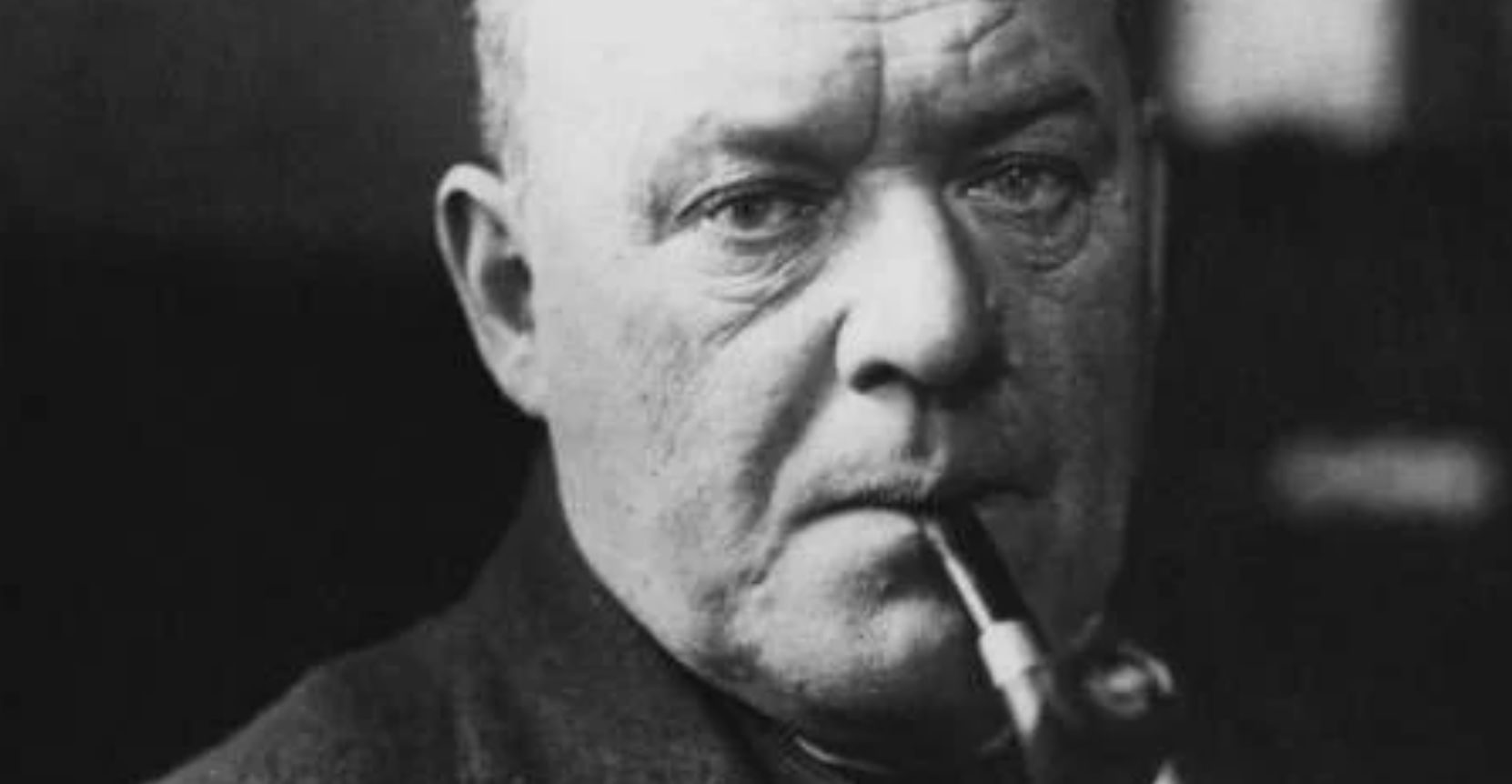
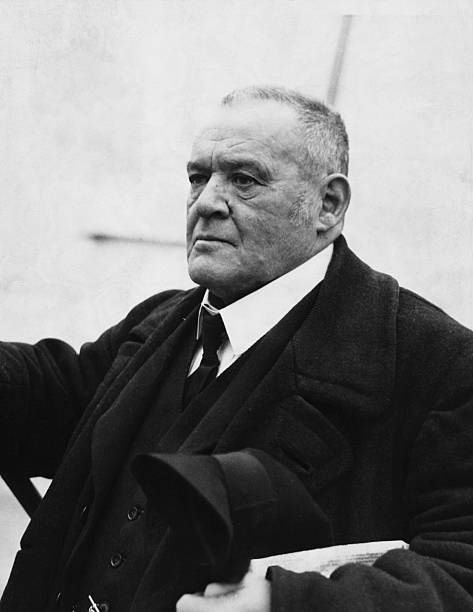
Few modern writers have understood this concept better than Hilaire Belloc.
Today Belloc is often remembered as an historian, polemicist, poet, a defender of Catholic civilization, but most commonly, he is just ‘Chesterton’s friend.’ Yet among his many works, The Path to Rome remains one of his most revealing. Published in 1902, it recounts Belloc’s pilgrimage on foot from France to Rome. What makes the book remarkable is that it is not merely a travel narrative. He does more than simply recount the things he sees and the people he talks to along the way. In a far more imaginative capacity, it is a meditation on memory, culture, friendship, faith, history, and the human condition itself.
Much unlike the modern tourist, Belloc does not experience the world through a windshield or a screen. He encounters it directly, even under foot. The road places him face-to-face with landscapes, weather, churches, villages, and fellow travelers. He moves at the pace for which the human person was made, giving him the freedom to notice details that would otherwise disappear into the blur of modern life.
The journey becomes an education in attentiveness. This may be the first gift that walking offers. It restores our ability to see.
Now, let it be known that this essay is not a polemical piece against modern transportation. It is a great convenience and allows us the opportunity to go places and do things that would have otherwise been impossible. For instance, Cassidy and I will be taking Benedict to Italy, Slovenia, and Ireland this summer, it will be such a blessing. What I am writing against is the thoughtless commute which so often consumes our lives, traveling from point A to point B as if it is an obstacle to avoid.
Here is my point: modern life encourages us to treat the outside world as background scenery. We move rapidly from one destination to another, insulated from our surroundings by glass, technology, schedules, and noise. Walking strips away many of those barriers. The traveler notices the changing light across a field, the smell of rain before it arrives, the distant sound of church bells, or the unexpected conversation with a stranger along the road.
The world ceases to be an object that we pass through and becomes a place that we inhabit.
There is a profound difference between driving through a town and walking through it. The driver sees buildings in the periphery, but most focus on the road. The walker is able to notice front porches, gardens, parish churches, old cemeteries, and the faces of his neighbors and fellow citizens. A man who walks to the local coffee shop, the pub, or his own parish comes to know his community in a way that the commuter never will. Places acquire meaning because they are encountered deliberately rather than merely passed by.
Belloc understood that this attentiveness is not merely aesthetic. It is spiritual.
To walk through creation is to encounter reality as something given rather than manufactured. The walker cannot flatten the hills, command the weather, or shorten the distance. He must accept the world on its own terms. In doing so, he recovers a truth that modernity often obscures: man is a creature before he is a consumer, a pilgrim before he is a producer.
Walking therefore becomes a school of humility.
Modern technology often promises mastery. We have grown accustomed to convenience. We expect comfort. We increasingly shape the world to suit our preferences. The road teaches a different lesson. It reminds us that reality is not infinitely malleable and that our limitations are not defects to be overcome but part of what makes us human.
The walker grows tired. His feet ache. He must endure heat, cold, rain, and uncertainty. Yet these inconveniences are not obstacles to the experience. They are part of it. The body itself becomes a participant in the journey rather than a vehicle carrying the mind from one location to another.
Far from diminishing human dignity, this restores it.
A man becomes more human when he accepts his place within creation rather than imagining himself above it.
Walking also cultivates gratitude.
The road teaches us that creation is not raw material awaiting our manipulation but a gift awaiting our reception. The beauty of a sunrise, the shade of a tree, the sight of a distant church steeple, or the hospitality of a small village inn all appear differently to the man who arrives on foot. Such things cannot be scheduled, purchased, or optimized. They can only be received.
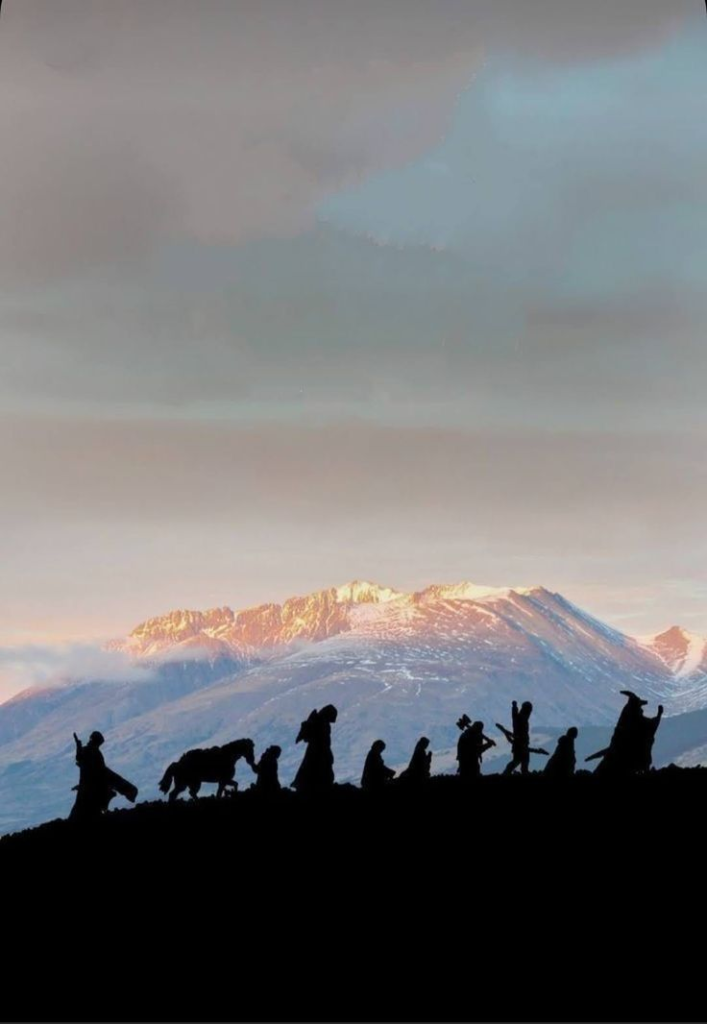
This spirit of gratitude lies at the heart of Belloc’s vision.
Much of his work can be understood as a defense of Christendom, not merely as a political arrangement but as a way of inhabiting the world. Belloc loved Europe because he saw it as a landscape shaped by centuries of Christian faith. Monasteries, chapels, shrines, roadside crosses, pilgrimage routes, and village churches testified to a civilization that once understood life itself as a journey toward God.
To walk through such places was to encounter history made visible.
The road became a kind of living archive. The traveler entered into communion with generations who had walked the same paths, prayed in the same churches, and sought the same heavenly homeland.
This is why pilgrimage differs from tourism.
The tourist collects experiences. The pilgrim seeks transformation.
One consumes places while the other allows himself to be formed by them.
Belloc’s genius was recognizing that even an ordinary walk can become a kind of pilgrimage. One need not cross Europe on foot to learn the lessons of the road. A walk through one’s neighborhood, an evening stroll with the wife, a visit to a local church, or a journey to a nearby café can all become opportunities to recover attentiveness, gratitude, and wonder.
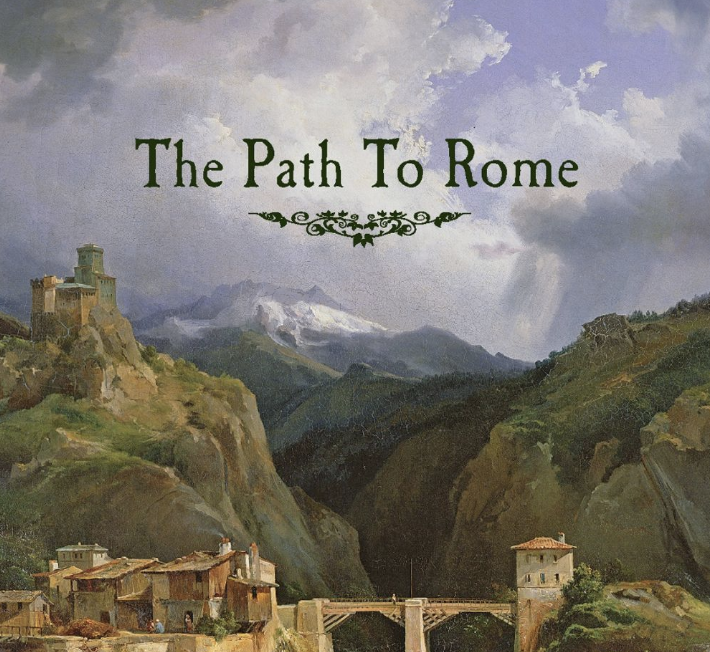
The destination matters, but so does the manner in which we travel.
The Christian life unfolds according to the same principle. We have not yet reached our destination. There are hills to climb, storms to endure, and wrong turns to correct. Yet God uses the journey itself to shape the soul. Through prayer, sacrifice, friendship, worship, and daily fidelity, He prepares us for our final home.
Belloc’s great insight was that the physical road can teach us something about this spiritual reality. The dust on one’s boots, the fatigue in one’s legs, the conversation shared along the way, and the beauty discovered around an unexpected bend all become reminders that life itself is a pilgrimage.
In an age of speed, convenience, and distraction, this vision remains deeply relevant.
Walking restores us to a properly human way of inhabiting the world. It reunites body and soul, slows our perception to the pace of reality, and teaches us once again to receive creation as a gift. It reminds us that we are embodied souls moving through a world charged with the presence of God.
Belloc’s boots were dusty because he spent his life on the road. Yet his vision remained remarkably clear. He understood that the road is never merely a road. For those with eyes to see, it becomes a school of gratitude, a lesson in humility, and a reminder that every faithful step brings us closer to home.

Leave a Reply